
Potholes, cracked asphalt, uneven pavement, and other road defects can create dangerous driving conditions throughout Las Vegas. These hazards may cause drivers to lose control, damage their vehicles, or get into serious accidents. Extreme heat, heavy traffic, and seasonal rain can make deteriorating roads even more difficult to navigate.
Responsibility for a pothole accident depends on who maintained the roadway, whether the hazard was known or reasonably discoverable, and how the accident occurred. Depending on the circumstances, a government agency, construction contractor, utility company, or private property owner may be responsible. A driver’s actions may also affect how fault is determined.
Photographs, accident reports, maintenance records, and witness statements can help establish what caused the collision. Heidari Law Group can review the circumstances of a damaged pavement accident in Las Vegas, identify potentially responsible parties, and explain available legal options under Nevada law.
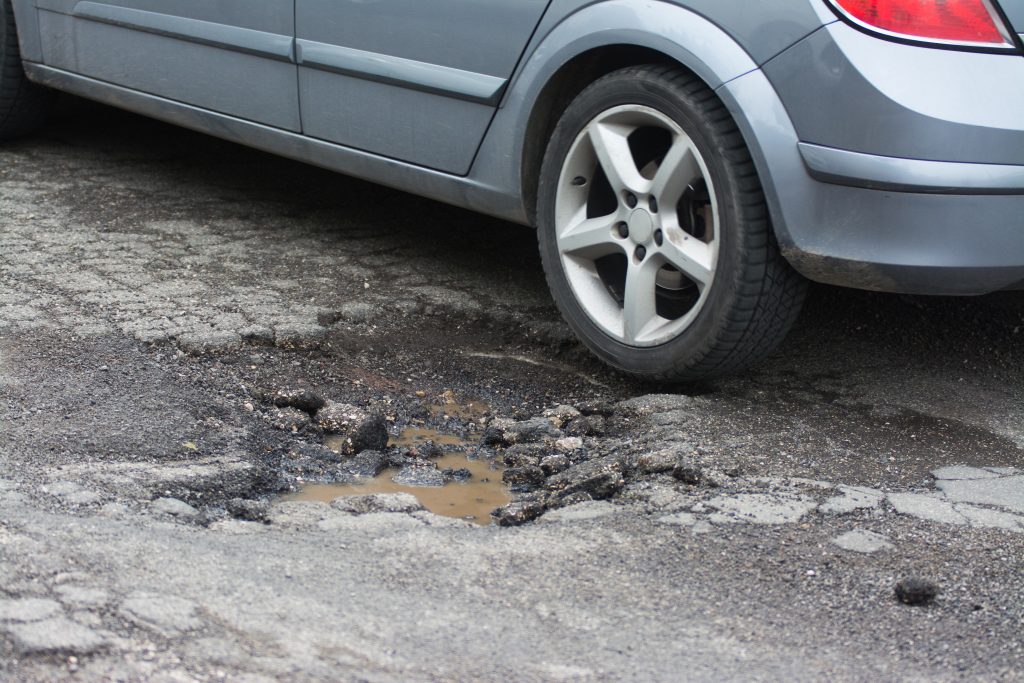
Las Vegas Attorneys Handling Pothole and Road Defect Accident Claims
Handling a road defect accident differs from a routine insurance claim because you must first establish who maintains the roadway. In the Las Vegas Valley, the responsible party may be a state agency, city, county, construction contractor, or private property owner.
An attorney typically begins by identifying the exact accident location. Street names may not be enough, especially near freeway ramps, jurisdictional boundaries, hotel entrances, parking areas, or utility work. Photographs, GPS coordinates, dashcam footage, repair invoices, and lane descriptions can help establish where the accident occurred.
A lawyer may also investigate whether the damaged pavement was previously reported or repaired. Useful records include:
- Previous complaints and inspection reports
- Maintenance schedules and repair records
- Construction permits and lane closure plans
- Communications concerning the damaged roadway
These records may help determine who controlled the location, whether the hazard was known, and whether the response was reasonable.
The investigation should consider other possible causes. Construction work, drainage problems, missing warning signs, vehicle maintenance, speed, or another driver’s actions may have contributed to the accident.
Depending on the evidence, recoverable losses may include:
- Emergency medical care and follow-up treatment
- Lost income or reduced ability to work
- Vehicle repairs and towing expenses
- Rental transportation costs
- Other documented accident-related expenses
An attorney can organize records, communicate with insurers, review coverage, and distinguish accident-related losses from unrelated damage.
How Does a Lawyer Determine Who Maintained the Damaged Road?
Determining who maintained a damaged road starts with identifying the exact accident location. Roads that appear connected may be controlled by different organizations. The Nevada Department of Transportation generally maintains
Interstate 15, U.S. 95, and certain state routes generally fall under the Nevada Department of Transportation. Other roads may be maintained by the City of Las Vegas, Clark County, or private property owners.
An attorney may use photographs, dashcam footage, police reports, GPS information, and nearby addresses to establish the location. The direction of travel and exact lane can matter when an accident occurs near a ramp, bridge, driveway, or jurisdictional boundary.
Official maps, property records, right-of-way information, and maintenance records can help identify who controlled the roadway.
However, road ownership and maintenance responsibility are not always the same. A public agency may own the road while a utility company or contractor handles specific repairs. Temporary patches, trenching, drainage work, and utility markings may indicate another responsible party.
Relevant documents may include:
- Maintenance agreements and construction contracts
- Work orders and inspection reports
- Utility permits and repair schedules
- Previous complaints about the pavement
- Traffic control and lane closure plans
The investigation also considers what the responsible party knew or should reasonably have known about the hazard. Prior complaints, inspections, and repair records may help establish how long the condition existed.
Clark County Public Works provides information about reporting potholes, damaged pavement, and other roadway maintenance concerns.
A damaged pavement crash lawyer may request government records, send preservation notices, review contracts, or consult roadway professionals when necessary.
Heidari Law Group can evaluate the available records and identify parties who may require further investigation. Because pavement can be repaired quickly and recordings can be overwritten, early documentation matters.
Should You Contact a Lawyer After a Crash Caused by Damaged Pavement?
Not every pothole accident requires legal representation. When damage involves only a minor tire repair, and the insurer handles the claim fairly, a driver may choose to resolve the matter directly.
Speaking with a lawyer may be useful when an accident involves:
- Physical injuries or significant vehicle damage
- Missed work or medical expenses
- Disputed responsibility
- Uncertainty about who maintained the road
- Construction work or government-controlled pavement
- Complicated insurance claims
Construction and utility work can make responsibility difficult to determine. Depending on the location, a state agency, city, county, contractor, utility company, or private property owner may be involved.
Timing is important because potholes may be repaired, warning signs removed, and video recordings overwritten. Witnesses may also forget details about lighting, traffic, or weather.
An attorney may recommend preserving original photographs, videos, damaged vehicle parts, repair records, and medical documentation. Drivers should not enter active traffic to photograph or measure road defects.
Medical concerns should be addressed based on symptoms and professional advice. Neck pain, back discomfort, headaches, or limited movement may develop after the initial impact. Accurate medical records can document when symptoms appeared and what treatment was provided.
Insurance claims may also require recorded statements, medical authorizations, photographs, or signed releases.
Legal counsel can review insurance policies, coverage, repair estimates, and communications while helping document accident-related losses.
Nevada’s comparative negligence rules may apply when several parties contributed to the accident. Claims involving government entities can also involve additional legal limitations and procedures.
How Can an Attorney Document Potholes and Pavement Defects?

Documenting a pothole accident involves more than photographing damaged asphalt.
This is especially important in Las Vegas, where repairs, weather, and construction can quickly change the accident scene. Road and weather updates are available through the Nevada Department of Transportation (NDOT).
Investigators often begin with available evidence, including photographs, dashcam footage, crash reports, towing records, repair estimates, and messages sent around the time of the accident.
Original photographs and videos may contain useful date, time, and location information that screenshots or compressed files can lose. Preserve these files without unnecessary changes.
When a site inspection is appropriate, an attorney may arrange for a qualified investigator to document:
- The pothole’s location, depth, width, and surrounding pavement
- Nearby lane markings, traffic signs, and lighting
- Drainage conditions and standing water
- Construction equipment and temporary repairs
- Fixed landmarks that help identify the scene
A lawyer may also request records showing how long the pavement defect existed and who was responsible for maintaining it. These can include inspection logs, repair orders, construction contracts, permits, and previous complaints.
The Federal Highway Administration (FHWA) provides guidance on pavement maintenance and preservation. These practices help transportation agencies address deteriorating road surfaces and maintain safer driving conditions.
Road and weather information may provide additional context. NDOT traffic records, project notices, and National Weather Service observations can help establish weather conditions, visibility, or reported road closures near the time of the accident.
Vehicle damage may also help explain what happened. Tire damage, bent wheels, suspension components, alignment results, and repair photographs can provide information about the impact.
Witness statements can provide additional details about whether the defect was visible, warning signs were present, or similar accidents had occurred.
Heidari Law Group can organize this evidence, review potential sources of responsibility, and explain how Nevada law may apply. Documentation supports an investigation, but it does not automatically establish liability.
Frequently Asked Questions
Can a pothole accident claim involve a government agency?
Yes. Government agencies maintain some damaged roads. These claims may involve additional legal limitations, defenses, and procedural requirements under Nevada law.
*** Disclaimer: This page, created by Heidari Law Group, is intended solely for educational purposes and provides a general overview of legal principles. It does not constitute specific legal advice. Your use of this site and review of this material does not establish an attorney-client relationship with Heidari Law Group or any of its members. Legal standards change, and the information presented here may not reflect the most current laws. All logos and images on this site are the property of their respective owners and are used for illustrative purposes only; their presence does not imply endorsement or affiliation. Please respect the copyright restrictions of these images and logos. Contact us immediately if you have concerns about copyright infringement or require proper attribution. We are committed to honoring intellectual property rights and will respond promptly to any issues.

Free Case Evaluation 24/7
Contact Us
CASE RESULTS
$500,000
Rear-End Accidents
$500,000
Sideswipe Accidents
$1.1 Million
Head-On Accidents
$2.0 Million
T-Bone Accidents
$1.0 Million
Single-Vehicle Accidents
Case Results
$3.3 Million
Motorcycle Accident
$2.0 Million
Car accident
$1.4 Million
Brain Injury
$1.1 Million
Motor Vehicle Accident
Related ArticlesHeidari Law Group
- Las Vegas Car Accidents Caused by Sudden Highway Traffic Slowdowns
- Accidents Caused by Faded or Incorrect Lane Markings in Las Vegas
- Highway Construction-Zone Car Accidents in Las Vegas
- Las Vegas Car Accidents Caused by Missing or Obstructed Road Signs
- Who Is Responsible When a Driver Backs Into Traffic in Las Vegas
- Accidents Caused by Malfunctioning Traffic Signals in Las Vegas
- Las Vegas Accidents Caused by Drivers Crossing Solid Lane Lines
- Who Is Liable in a Double Left-Turn Lane Accident in Las Vegas