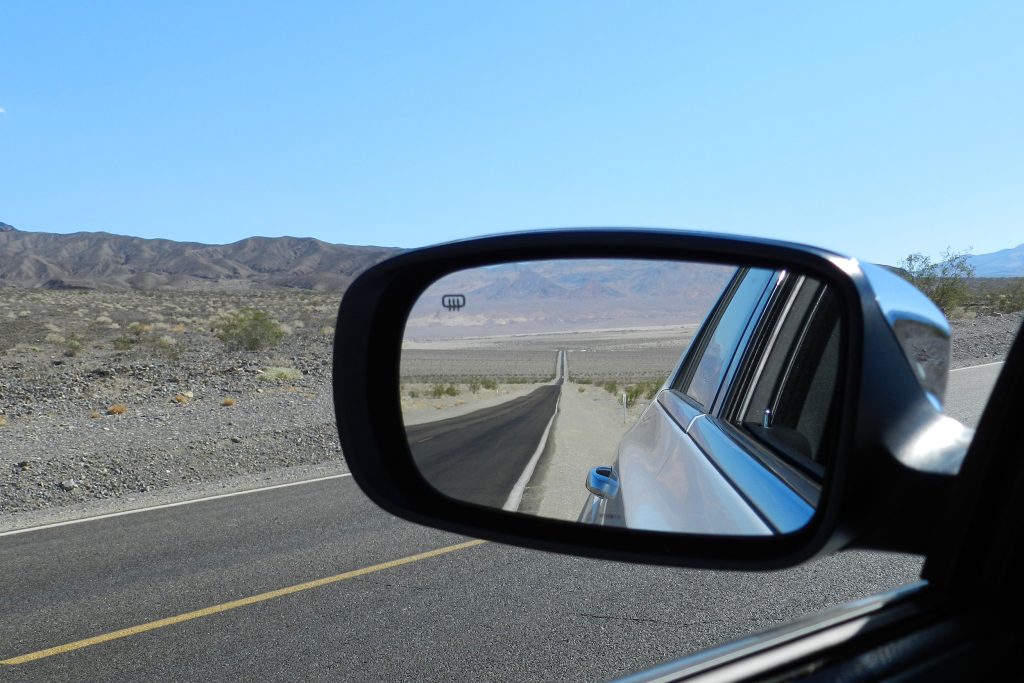
Blind-spot crashes can happen in seconds, especially on busy Las Vegas roads where vehicles merge, change lanes, and enter freeway ramps close together. A driver may check their mirrors yet miss a motorcycle, compact car, bicycle, or pedestrian positioned just outside their view. Checking over the shoulder before moving can help prevent contact.
The Nevada DMV Driver Handbook advises drivers to check mirrors, look over their shoulders, signal, and confirm that the next lane is clear before moving. A turn signal communicates intent, but it does not replace a careful blind-spot check.
These collisions often occur on Interstate 15, the Las Vegas Beltway, U.S. 95, and multilane streets near the Strip. Heavy visitor traffic, frequent construction changes, rideshare pickups, and unfamiliar exits can add pressure.
A blind-spot accident may involve more than scraped paint. The sideways impact can push a vehicle into another lane, a barrier, or surrounding traffic. Occupants may experience neck, back, shoulder, or head symptoms, while motorcyclists or cyclists face added risk because they have little physical protection. Some discomfort appears hours or days later.
After a collision:
Preserve Records: Keep medical bills, repair estimates, missed-work records, and insurance correspondence.
Check for Injuries: Call 911 when emergency assistance is needed.
Move to Safety: Move away from active traffic when safe and lawful.
Exchange Information: Collect driver contact and insurance details.
Document the Scene: Photograph vehicle damage, lane markings, traffic signs, and roadway conditions.
Identify Witnesses: Save contact information and note nearby cameras.
Fault is not always determined solely by where the vehicles touched. Evidence may show whether a driver signaled, crossed a lane line, accelerated during a merge, or had enough time to react.
Insurance claims can be more complicated when commercial vehicles, rental cars, rideshare drivers, or multiple drivers are involved. Before giving a recorded statement or accepting a settlement, review your documented losses and possible future medical needs. Legal deadlines may also vary depending on the circumstances.
Las Vegas Attorneys Handling Blind-Spot Accident Claims
A blind-spot accident attorney may investigate how the collision occurred, determine potentially responsible parties, and evaluate available insurance coverage.
This matters when rental cars, commercial vehicles, rideshare drivers, or multiple insurance policies are involved.
What Evidence and Records Should Be Reviewed?
Important documents may include:
- Medical Records: Treatment notes, bills, and recommendations for future care.
- Accident Evidence: Photographs, witness information, video recordings, and vehicle damage.
- Employment Records: Lost wages, work restrictions, and missed assignments.
- Insurance Documents: Claim numbers, correspondence, recorded-statement requests, and settlement offers.
A lawyer may compare this information with the driver’s statements to determine whether the evidence supports the insurer’s assessment of fault
Depending on the circumstances, recoverable losses may include medical expenses, future treatment, lost income, reduced earning ability, property damage, and physical or emotional effects.
Medical providers, employers, and repair professionals may help document disputed expenses or future needs.
Legal deadlines can vary depending on the type of claim and the parties involved. Claims involving government vehicles or public entities may require additional procedures.
Before accepting a settlement, understand which claims are being resolved and whether unpaid medical expenses or future treatment could affect the agreement.
Heidari Law Group can review insurance communications, explain your legal options, and discuss whether negotiation or litigation is appropriate.
Can an Attorney Obtain Video Evidence of an Unsafe Lane Change?
Video can be some of the most useful evidence in a Las Vegas blind-spot collision, but obtaining it often requires quick action. Recordings may show when a vehicle crossed a lane line, whether a turn signal was activated, and how surrounding traffic responded.
An attorney can identify likely video sources and send preservation requests before routine deletion. However, surveillance recordings may be deleted or overwritten, making early preservation important.
Where Can Video Evidence Come From?
Possible sources include:
- Dashcams: Recordings from vehicles involved in the collision.
- Commercial Vehicles: Cameras installed in rideshare, delivery, or company vehicles.
- Businesses and Properties: Security footage from hotels, casinos, parking garages, apartments, or nearby stores.
- Traffic Cameras: Available recordings from transportation agencies or roadway systems.
Not every camera records or stores footage. An attorney may contact the appropriate business or agency to determine whether recordings exist.
An attorney may also compare video footage with police reports, vehicle damage, witness accounts, and electronic information.
What Evidence Shows a Driver Failed to Check a Blind Spot?
Proving that a driver failed to check a blind spot rarely depends on a single statement or photograph. Courts usually answer the question by combining physical evidence, witness observations, electronic records, and the drivers’ accounts. Under Nevada law, a driver must remain in their lane and may not change lanes until they can do so safely. Evidence showing how and when the vehicle moved can help determine whether the driver followed that duty.
Important evidence includes:
- Vehicle Damage: Scrapes, dents, paint transfer, and impact locations that may show how the vehicles collided.
- Video Footage: Recordings showing lane changes, signaling, and surrounding traffic.
- Vehicle Data: Available information about speed, braking, steering, and other activity.
- Witness Statements: Accounts describing vehicle movements and driver behavior.
- Roadway Conditions: Lane markings, construction barriers, lighting, visibility, and weather.
- Driver Statements: Comments on whether the driver saw another vehicle before the collision.
The National Highway Traffic Safety Administration (NHTSA) explains that event data recorders in some vehicles capture information shortly before, during, or after a crash.
A Blind-Spot Collision Injury Lawyer in Las Vegas can compare these materials, seek available records, and evaluate whether the evidence supports a claim under Nevada law. Heidari Law Group may also identify missing evidence and communicate with insurers. Each crash is different, and no single item automatically establishes fault; reliability, admissibility, and the factual record still matter.
How a Lawyer Responds When an Insurer Disputes Blind-Spot Liability
When an insurer disputes responsibility for a blind-spot accident, it may argue that the other driver was speeding, changing lanes at the same time, or traveling where they could not reasonably see the other driver. An attorney can review the insurer’s explanation and compare it with the available evidence.
The investigation may include police reports, photographs, video footage, vehicle damage, and roadway conditions. Nevada law requires drivers to change lanes safely. Using a turn signal does not automatically mean the adjacent lane is clear.
A lawyer may:
- Review the insurance company’s explanation and supporting evidence.
- Compare driver statements with photographs, video, and vehicle damage.
- Examine turn signals, lane markings, speed, and visibility.
- Challenge unsupported claims about shared responsibility.
- Organize medical records, repair estimates, and financial losses.
- Discuss settlement or litigation options when appropriate.
A lawyer may also prepare a liability package containing lane diagrams, timestamped photographs, witness statements, and medical documentation.
The Nevada Division of Insurance provides information about insurance regulations, consumer protections, and common insurance questions.
An attorney may also review recorded statements, correct factual errors, and communicate with adjusters to address disputed information. Statements made immediately after a crash may be incomplete because of stress or confusion.
Heidari Law Group can review insurance denials, evaluate evidence, and explain available legal options. Keep denial letters, insurance correspondence, photographs, medical records, and repair documents.
Frequently Asked Questions
Who Is at Fault in a Blind-Spot Accident?
Fault depends on each driver’s actions before the collision. A driver who changes lanes without checking their blind spot may be responsible, but speeding, simultaneous lane changes, or other unsafe behavior may also contribute.
What if the Insurance Company Denies My Blind-Spot Accident Claim?
An insurance denial does not necessarily end the claim. An attorney may review the insurer’s explanation, examine additional evidence, and discuss whether negotiation or legal action may be appropriate.
Authoritative References
The following government resources provide additional information about safe lane changes, accident investigations, and insurance issues.
- Nevada Department of Motor Vehicles — Nevada Driver Handbook
- National Highway Traffic Safety Administration — Event Data Recorders
- Nevada Division of Insurance — Consumer Insurance FAQs
*** Disclaimer: This page, created by Heidari Law Group, is intended solely for educational purposes and provides a general overview of legal principles. It does not constitute specific legal advice. Your use of this site and review of this material does not establish an attorney-client relationship with Heidari Law Group or any of its members. Legal standards change, and the information presented here may not reflect the most current laws. All logos and images on this site are the property of their respective owners and are used for illustrative purposes only; their presence does not imply endorsement or affiliation. Please respect the copyright restrictions of these images and logos. Contact us immediately if you have concerns about copyright infringement or require proper attribution. We are committed to honoring intellectual property rights and will respond promptly to any issues.

Free Case Evaluation 24/7
Contact Us
CASE RESULTS
$500,000
Rear-End Accidents
$500,000
Sideswipe Accidents
$1.1 Million
Head-On Accidents
$2.0 Million
T-Bone Accidents
$1.0 Million
Single-Vehicle Accidents
Case Results
$3.3 Million
Motorcycle Accident
$2.0 Million
Car accident
$1.4 Million
Brain Injury
$1.1 Million
Motor Vehicle Accident
Related ArticlesHeidari Law Group
- Las Vegas Car Accidents Caused by Sudden Highway Traffic Slowdowns
- Accidents Caused by Faded or Incorrect Lane Markings in Las Vegas
- Highway Construction-Zone Car Accidents in Las Vegas
- Las Vegas Car Accidents Caused by Missing or Obstructed Road Signs
- Who Is Responsible When a Driver Backs Into Traffic in Las Vegas
- Accidents Caused by Malfunctioning Traffic Signals in Las Vegas
- Las Vegas Accidents Caused by Drivers Crossing Solid Lane Lines
- Who Is Liable in a Double Left-Turn Lane Accident in Las Vegas