
Flash floods can turn Las Vegas roads into dangerous driving conditions within minutes. During monsoon storms, water may collect in intersections, underpasses, washes, and construction zones. The National Weather Service warns that flooding can develop quickly, even when heavy rainfall occurs miles away. Floodwater can conceal damaged pavement, debris, and unexpected changes in road elevation.
The National Weather Service advises motorists to avoid flooded roadways because water can conceal hazards and create dangerous driving conditions. Its flood safety guidance emphasizes turning around rather than driving through standing or moving water.
Conditions can differ across the Las Vegas Valley. A dry road near the Strip does not mean routes toward Summerlin, Henderson, or North Las Vegas are safe. Before driving, check Nevada 511, National Weather Service alerts, and local closure notices. Never enter a closed roadway or move a barricade.
If a collision occurs during a storm, move away from flowing water when safe, call 911, and follow emergency instructions. Then:
- Seek medical attention, including for symptoms that develop later.
- Exchange contact, vehicle, and insurance information.
- Photograph vehicle damage, injuries, standing water, and warning signs from a safe location.
- Preserve dashcam footage, weather alerts, towing records, and medical documents.
Rain does not excuse unsafe driving. Nevada motorists must use reasonable care, including adjusting speed, increasing following distance, and responding to poor visibility. Responsibility may depend on road conditions, vehicle maintenance, traffic controls, and driver behavior.
Evidence can disappear as floodwater recedes, debris is removed, and surveillance footage is overwritten. Police reports, roadway cameras, witness statements, and weather records may help establish the conditions surrounding a collision.
A Flash-Flood Accident Lawyer in Las Vegas can review evidence, insurance coverage, and potential responsibility. Heidari Law Group can explain the claims process and how Nevada law may apply. Each case depends on its circumstances.
How Las Vegas Lawyers Assess Driving Decisions on Flooded Roads
When reviewing a flood-related collision, attorneys examine what drivers knew, how they responded to hazardous conditions, and whether their decisions contributed to the crash. A sudden downpour may require slower speeds and greater following distances, while visible flooding at an underpass may make turning around the safer option.
Attorneys may establish a timeline using weather alerts, vehicle movements, witness accounts, dashcam footage, and the vehicles’ final positions.
Speed is evaluated against visibility, traffic, standing water, and stopping distance rather than the posted limit alone. Driving below the speed limit may still be unsafe when traction is reduced. Vehicle data, physical damage, and witness statements may help determine braking, steering, and reaction times. Phone records may also be relevant if distracted driving is suspected, subject to legal access requirements.
The Nevada Department of Transportation recommends reducing speed, increasing following distance, and using headlights during heavy rain. These safety measures can provide useful context when evaluating how drivers responded to reduced visibility and wet roadway conditions.
Vehicle condition is another consideration. Tire tread, brakes, windshield wipers, headlights, and stability systems can affect performance during heavy rain. Attorneys may review maintenance records, inspections, and repair histories alongside road conditions such as drainage, lane markings, warning signs, and construction activity.
An attorney must also connect potentially negligent conduct to the collision and resulting injuries. Relevant evidence may include:
- Medical records, diagnostic findings, and work restrictions.
- Vehicle photographs, repair invoices, and accident reports.
- Insurance policies and available coverage.
- Wage information and other documented financial losses.
Nevada’s modified comparative negligence rule may reduce compensation based on an injured person’s share of responsibility. Recovery may be barred when that share exceeds the combined responsibility of the parties pursued.
Can an Attorney Investigate Missing Flood Closure Warnings?
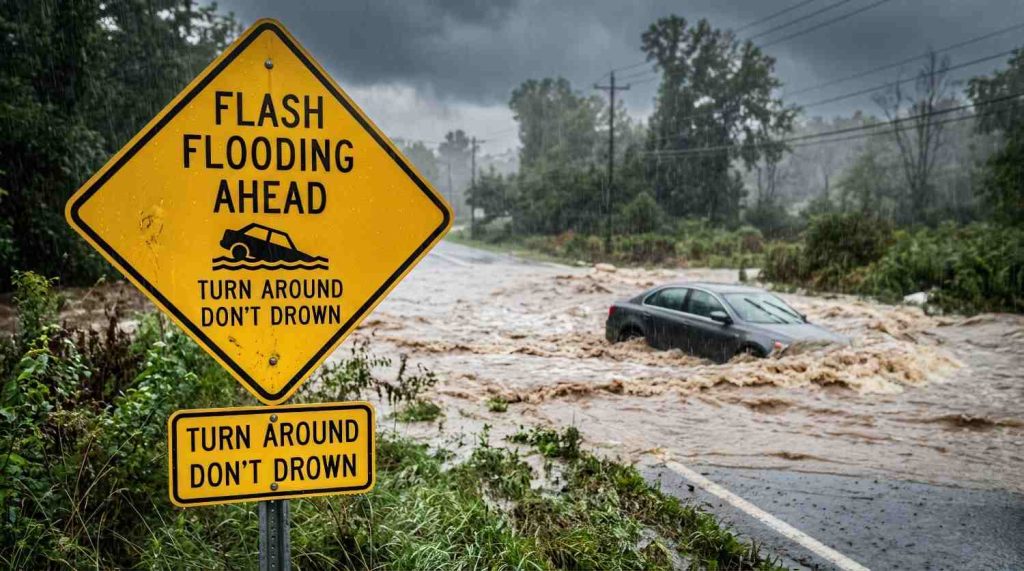
An attorney can investigate whether flood closure warnings were present, visible, and issued in time to alert motorists. The investigation considers who monitored the roadway, when flooding became known, and whether appropriate traffic controls were available.
Clark County’s Flash Flood Safety guidance explains that flash flooding can develop rapidly throughout Southern Nevada, especially in low-lying areas. These local hazards underscore the importance of recognizing flooded streets and following roadway-closure warnings.
Missing signs or barricades do not automatically establish responsibility. Evidence must connect the warning failure to the collision and resulting injuries.
Attorneys may request records from public agencies, contractors, nearby businesses, and towing companies. Relevant materials include:
- Nevada 511 notices and National Weather Service observations.
- Emergency alerts, dispatch logs, and closure timelines.
- Maintenance reports, work orders, and traffic-camera footage.
- Photographs showing missing, obstructed, or displaced warning devices.
A site inspection may help establish whether drivers could reasonably see warnings. Attorneys may examine sight distance, lighting, drainage, road grade, and lane geometry. Attorneys can compare photographs, dashcam recordings, and witness statements with official records.
When necessary, qualified engineers or weather professionals may evaluate rainfall timing, drainage, sign placement, and visibility.
Responsibility may involve a city, county, state agency, utility, or road contractor. However, claims involving government entities require additional legal analysis.
Attorneys must determine who controlled the roadway, whether the conduct contributed to the collision, and which filing requirements apply.
Even when warnings are missing, motorists must respond reasonably to visible hazards. Speed, following distance, vehicle condition, and available alternative routes may affect responsibility.
Heidari Law Group can review warning records, investigate potential responsibility, and explain applicable claim procedures without assuming an outcome.
Attorney Review of Drainage Records in Flash-Flood Collision Claims
Drainage records may help explain why water accumulated on a Las Vegas roadway and whether flooding developed gradually or without sufficient warning.
These records can document how stormwater was expected to flow, whether drainage systems were obstructed, and when maintenance crews last inspected the location. Attorneys compare this information with rainfall observations, vehicle movements, photographs, and witness statements.
Depending on roadway ownership, the City of Las Vegas, Clark County, the Nevada Department of Transportation, flood-control agencies, utilities, or private contractors may have records.
Relevant documents may include:
- Drainage inspections and inlet cleaning schedules.
- Maintenance records, work orders, and complaint histories.
- Pump records, engineering drawings, and construction reports.
- Maps identifying washes and detention facilities.
- Records of recurring flooding or planned improvements.
Drainage records require careful interpretation. Previous maintenance does not prove a system was functioning properly during a storm, and earlier flooding complaints do not establish that the same condition caused a later collision.
Attorneys may compare maintenance timestamps with National Weather Service observations, Nevada 511 notices, dispatch records, and traffic footage. Engineering drawings and photographs may help identify water depth, flow direction, sediment, and obstructed drains.
Qualified professionals may assess drainage capacity, maintenance practices, and runoff conditions when technical interpretation is necessary.
Preserving this information matters because electronic records may be overwritten, and road conditions can change after maintenance crews respond. Attorneys may use preservation notices, public-records requests, or formal discovery to obtain available documents.
Motorists should preserve photographs, weather alerts, dashcam footage, towing records, and details about the exact location and direction of travel.
A Flash-Flood Accident Lawyer in Las Vegas can evaluate how drainage records relate to driver conduct, causation, damages, and applicable legal procedures. Heidari Law Group can review this evidence and discuss possible next steps.
How Does a Lawyer Separate Flood Damage From Collision Injuries?
Flood damage and collision damage can happen almost at the same time. A vehicle may stall in standing water before being struck, or a collision may push it into a flooded lane. Distinguishing these events matters because different insurance coverages and legal requirements may apply.
An attorney may establish a timeline identifying when water entered the vehicle, when the collision occurred, and when injuries or mechanical problems developed.
Vehicle damage can provide important evidence. Collision-related damage may include crushed panels, broken lights, structural damage, or deployed restraints. Flood damage may involve waterlines, sediment, electrical problems, contaminated fluids, corrosion, or engine damage.
Photographs, repair diagnostics, towing records, vehicle data, and insurance inspections may help establish the sequence of events. Weather observations and road closure records can provide additional context.
Medical evidence is equally important. Injuries may result from the impact, sudden stopping, contact with the vehicle interior, cold-water exposure, or physical strain while exiting a disabled vehicle.
Attorneys may review medical records, imaging, treatment history, work restrictions, and symptom timing. Delayed symptoms do not automatically rule out an injury. When causation is disputed, a qualified medical professional may assess whether the condition is consistent with the incident.
Insurance coverage may differ depending on the damage:
- Collision coverage: May address vehicle damage caused by an impact.
- Comprehensive coverage: May apply to flood-related vehicle damage.
- Bodily injury liability coverage: May apply when another driver’s conduct causes injuries.
- Uninsured or underinsured motorist coverage: May become relevant depending on the circumstances.
- Medical payments coverage: May provide benefits under applicable policy terms.
Coverage remains subject to policy limits, deductibles, and exclusions. Insurers may separate flood-related and collision-related repairs within the same claim.
Motorists should retain repair estimates, denial letters, medical bills, rental invoices, and insurance communications. Request unclear coverage decisions in writing.
Frequently Asked Questions
Who Can Be Responsible for a Flash-Flood Accident in Las Vegas?
Responsibility depends on the circumstances of the collision. Drivers may be responsible if they fail to adjust their speed, following distance, or driving behavior to flooded conditions. Road contractors or government agencies may also be investigated when drainage problems or missing warnings contribute to a crash.
Can I File a Claim if Flood Warning Signs Were Missing?
A claim may be possible when missing or inadequate warnings contributed to a collision. An attorney may review road closure notices, maintenance records, traffic footage, and witness statements to determine whether a responsible party failed to provide appropriate warnings. Missing signs alone do not establish liability.
Does Car Insurance Cover Flash-Flood Damage?
Coverage depends on the policy and how the damage occurred. Comprehensive coverage may cover water-related vehicle damage, while collision coverage may cover damage caused by an impact. Deductibles, exclusions, and policy limits can affect what benefits are available.
How Can an Attorney Determine Whether Flooding Caused My Injuries?
An attorney may compare medical records, vehicle damage, photographs, witness statements, and accident timelines. Medical professionals may help determine whether injuries resulted from the collision, sudden stopping, water exposure, or physical strain. They must evaluate each claimed injury using the available evidence.

Free Case Evaluation 24/7
Contact Us
CASE RESULTS
$500,000
Rear-End Accidents
$500,000
Sideswipe Accidents
$1.1 Million
Head-On Accidents
$2.0 Million
T-Bone Accidents
$1.0 Million
Single-Vehicle Accidents
Case Results
$3.3 Million
Motorcycle Accident
$2.0 Million
Car accident
$1.4 Million
Brain Injury
$1.1 Million
Motor Vehicle Accident
Related ArticlesHeidari Law Group
- Accidents Caused by Loose Gravel on Las Vegas Roads
- Car Accidents During Las Vegas Dust Storms
- Las Vegas Car Accidents Caused by Sun Glare
- Accidents Involving Disabled Vehicles Stopped on Las Vegas Highways
- Las Vegas Car Accidents Caused by Sudden Highway Traffic Slowdowns
- Accidents Caused by Faded or Incorrect Lane Markings in Las Vegas
- Highway Construction-Zone Car Accidents in Las Vegas
- Las Vegas Car Accidents Caused by Missing or Obstructed Road Signs